

Have you ever stood in the middle of your living room, staring at an empty corner or an outdated sofa, trying desperately to imagine what a modern, stylish makeover would look like? You are certainly not alone. Redecorating a home, whether it is a single bedroom or an entire house, is one of the most exciting yet incredibly stressful endeavors a person can undertake. The fear of making expensive, irreversible mistakes is a very real psychological burden. Buying a two-thousand-dollar couch only to have it delivered and realize it completely clashes with your wall color or overwhelms the space is a nightmare no homeowner wants to face. This widespread anxiety is exactly why millions of homeowners, renters, and DIY enthusiasts are actively searching for how to use ai for interior design to eliminate the guesswork and visualize their dreams safely.
The absolute secret to mastering how to use ai for interior design lies in understanding one fundamental truth: you do not need to be a professional architect, an experienced decorator, or a technology genius. In the past, visualizing a room with any degree of realism required either hiring expensive professionals who charge by the hour or spending months learning complicated, frustrating software systems. Today, artificial intelligence has completely democratized the creative process. If you want to learn how to use ai for interior design, you have arrived at the perfect destination. This comprehensive, beginner-friendly guide will show you exactly how to upload a simple photograph of your room and instantly see realistic, stunning makeovers before you spend a single dime on furniture, paint, or contractors.
The Evolution of Design: Why Traditional Methods Are Holding You Back
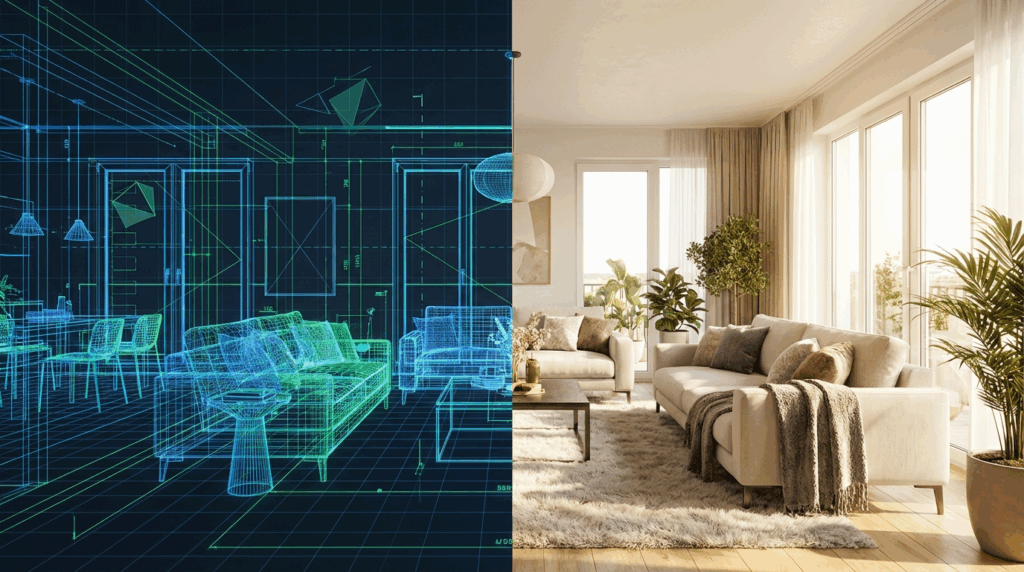
Before we dive into the exact, actionable steps of how to use ai for interior design, we must take a brief look at the history of spatial planning to understand how far we have come. If you search the internet for how to use ai for interior design, you might still stumble upon outdated advice, complex rendering tutorials, or software that requires a master's degree to operate. Let us clearly compare the old, painful way of doing things with the revolutionary new standard.
The Old Way: The Traditional 3D Modeling Era (CAD, 3ds Max, SketchUp)
For decades, if you wanted to see a highly realistic, accurate rendering of a room before the physical construction began, you had to rely on heavy, industrial-grade software. Tools like AutoCAD, 3ds Max, or SketchUp paired with V-Ray rendering engines are undeniably powerful. However, they are built exclusively for professional architects and dedicated 3D artists creating exact blueprints. The learning curve for these programs is notoriously steep and unforgiving. It takes weeks of dedicated study just to learn the user interface, and it can take hours for a high-end computer just to render a single lighting scenario. If you want to change the color of a rug, you have to adjust textures, recalculate lighting bounces, and wait for another render. This is simply not a viable answer for an everyday homeowner wanting a quick, inspiring visual of their living space.
The New Way: The One-Click AI Revolution with RoomDesign
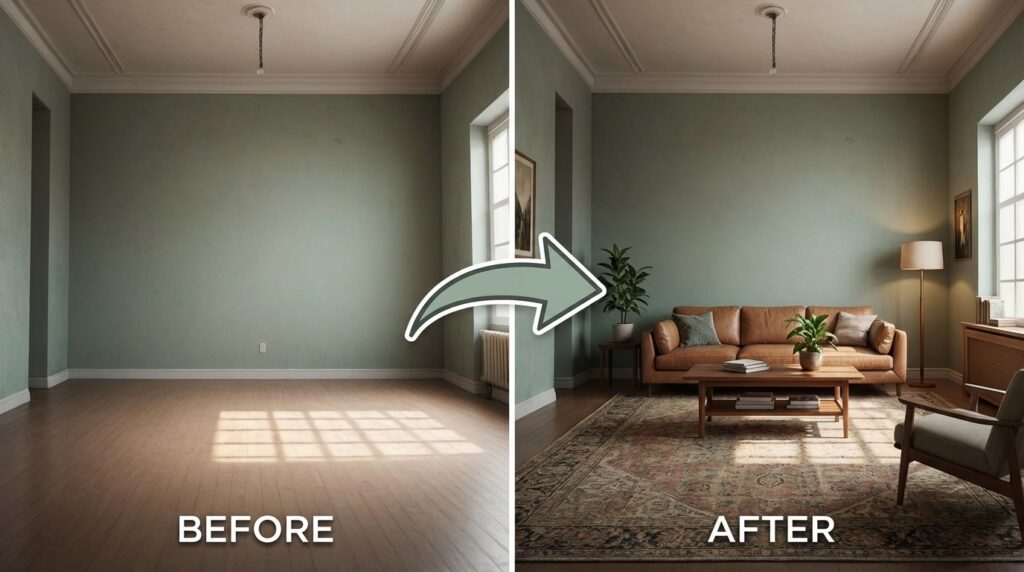
A massive, industry-altering breakthrough in how to use ai for interior design is the recent shift to effortless, one-click visualization solutions. This is exactly where RoomDesign enters the picture and completely changes the game. By utilizing incredibly advanced proprietary image-to-image algorithms, RoomDesign eliminates the need for complex software, heavy downloads, or long, frustrating rendering times entirely. You do not need to draw floor plans or build digital walls. You simply upload a photograph of your existing, messy room, and the platform's artificial intelligence does all the heavy lifting in the background.
We have already programmed and pre-set a massive library of stunning, highly-curated interior styles into the system. With just a single click, RoomDesign uses your physical walls, your existing windows, and your camera's perspective as a rigid, unchangeable foundation. It then instantly swaps out the old furniture, applies new paint, and adjusts the lighting based entirely on your chosen aesthetic. When figuring out how to use ai for interior design, this intuitive, one-click method is the absolute best way for non-professionals to get magazine-quality results instantly. It bridges the gap between your imagination and reality in mere seconds.
Step 1: Capture the Perfect "Before" Photo
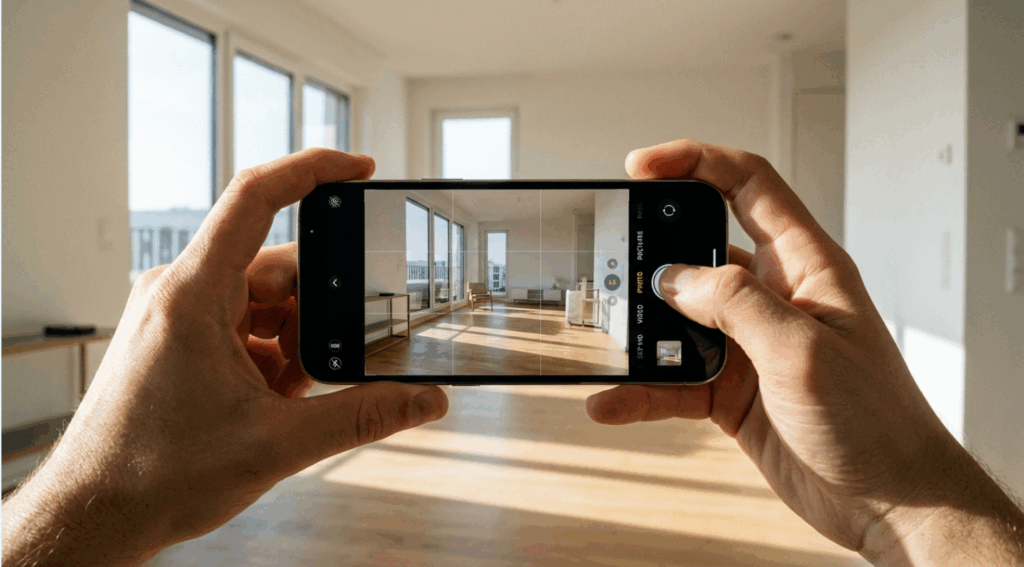
The first step in using AI for interior design is taking a clear, well-lit photo of your space, because the AI’s output depends entirely on the quality of your input. Use natural daylight instead of artificial lights, shoot from a corner at chest height to capture depth, and tidy up the room so the AI can accurately interpret the layout. A smartphone works perfectly if you follow these simple guidelines.
Step 2: Open RoomDesign and Choose Your Visualization Mode
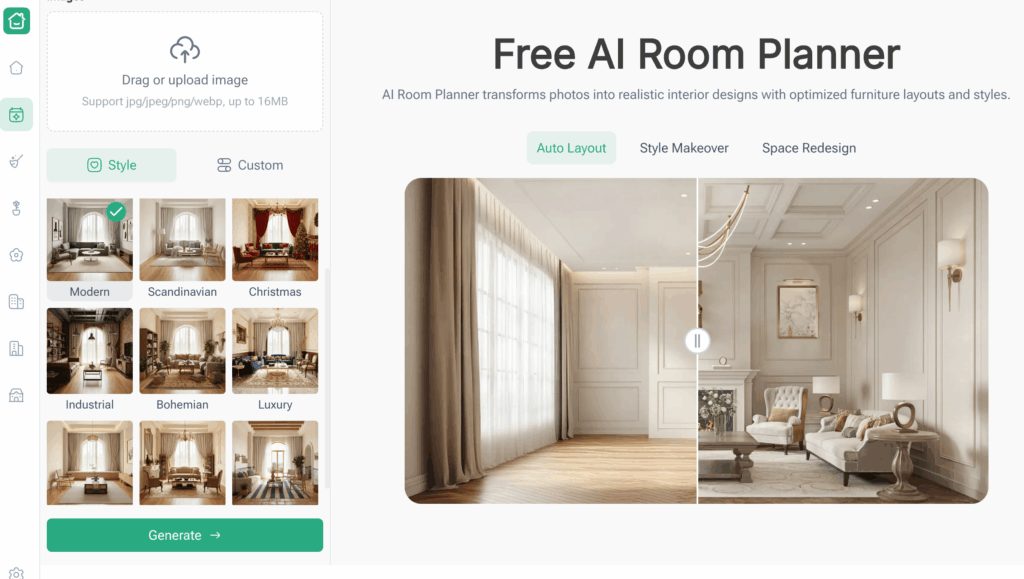
The next crucial phase of how to use ai for interior design is utilizing the correct tool for the job. You want a platform that is incredibly intuitive, lightning-fast, yet powerful enough to handle different creative needs without overwhelming you.
We built the RoomDesign platform to be your ultimate, all-in-one visualization solution. While the platform does include powerful text-to-image capabilities (for creating entirely new, fictional spaces from scratch) and advanced "custom style" options for absolute, granular control over specific elements, we firmly believe that starting with your own photograph is the most practical approach.
For the purposes of this specific tutorial on how to use ai for interior design, we will focus entirely on the most popular and user-friendly workflow. To get started, simply open RoomDesign on your desktop or mobile browser. This mode provides the fastest path to realistic results without requiring any coding, prompt writing, or software installation. Just drag and drop the photo you took in Step 1 straight into the upload box.
Step 3: Select Your Vibe and Aesthetic
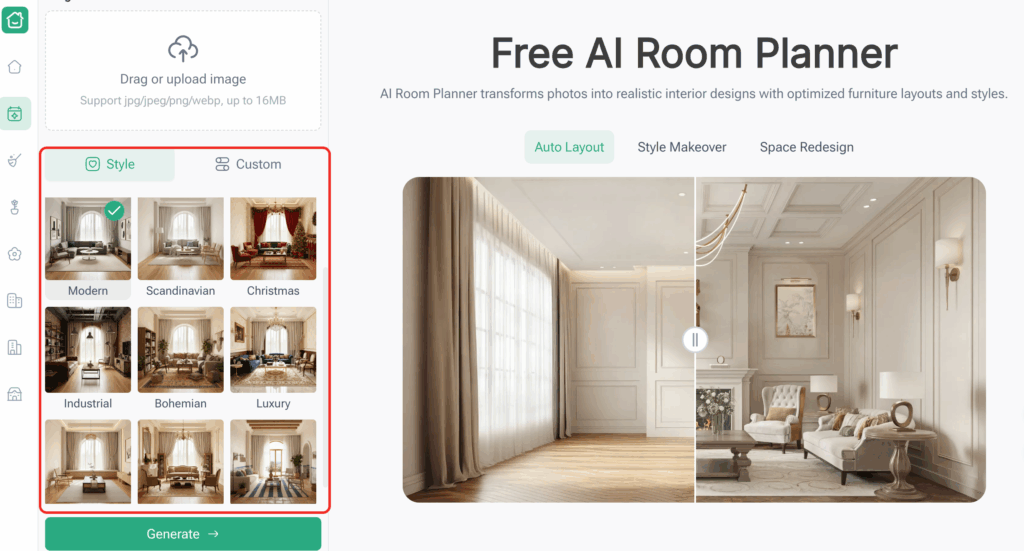
One of the most creative parts of using AI for interior design is experimenting with different prebuilt styles. AI tools offer a wide range of predefined aesthetics, such as minimalist, modern, industrial, cozy, or eclectic, allowing you to quickly apply and test different looks in your space. Many homeowners know what they like visually but struggle to describe it, and these preset styles bridge that gap, helping you see what truly works before committing to any changes.
Step 4: Generate, Review, and Iterate
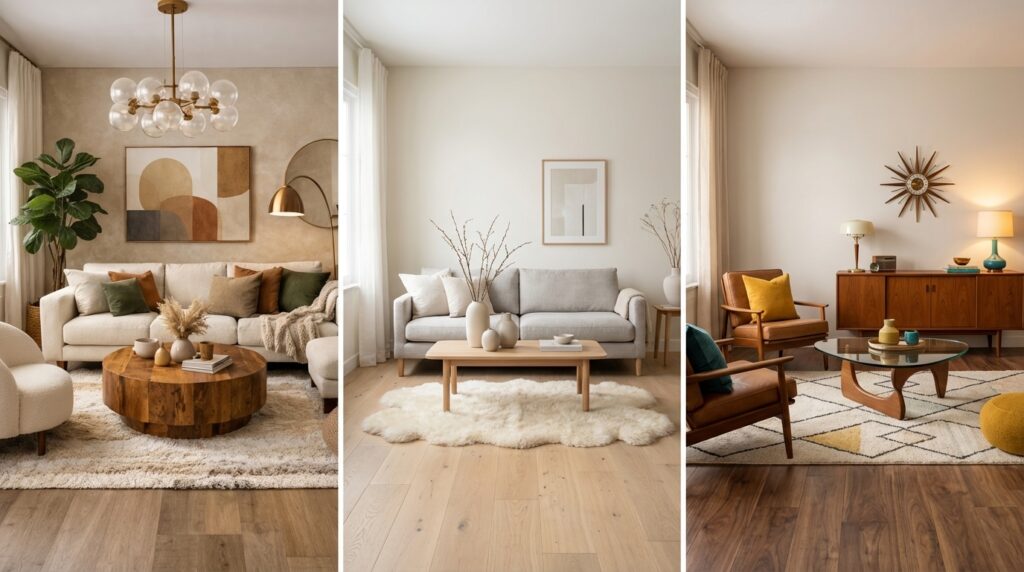
Once you have selected a style that catches your eye, it is time for the magic to happen. Hit the generate button. Within a matter of seconds, the AI algorithm meticulously analyzes your room's geometry, digitally removes the old, unwanted furniture, and places highly realistic, proportionally accurate 3D assets into the space, perfectly matching the lighting and shadows of your original photo.
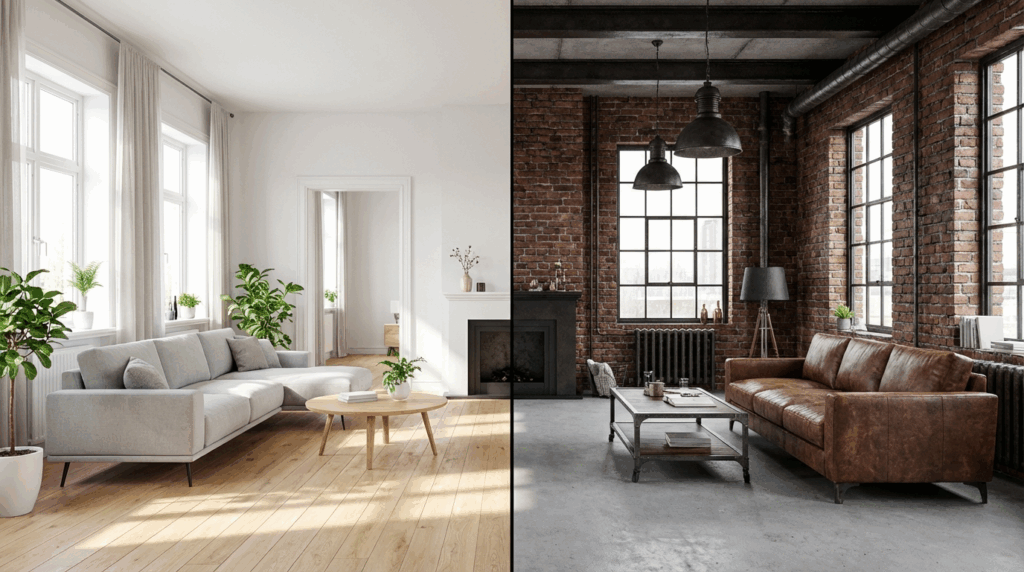
As you discover how to use ai for interior design, you will quickly realize that the first generation is just the starting line, not the finish line. Look very closely at the resulting image. Does the Japandi style make your large living room look a bit too bare and cold? Simply switch the setting to Mid-Century Modern and generate again. Does the Industrial look feel too harsh for a bedroom? Switch to Bohemian for an immediate injection of warmth and texture.
It takes only a few clicks to find absolute perfection. Mastering how to use ai for interior design allows you to rapidly cycle through dozens of high-end, professional design concepts in the exact amount of time it would take to brew and drink a cup of coffee. If you are ready to experiment with these incredible styles yourself, you can easily try the AI room planner right now. Uploading a photo and testing different vibes is undeniably the quickest way to uncover your true design preference.
Top Use Cases: When to Rely on AI for Your Space
To truly grasp the power and versatility of this technology, let us examine the most common, real-world scenarios where utilizing this tool becomes an absolute lifesaver.
1. Buying a New Home or Moving into an Apartment
When you tour an empty house or a vacant apartment, it is notoriously difficult for the human brain to accurately gauge the scale of the rooms. Will your current king-sized bed actually fit comfortably in that master bedroom, or will it block the closet door? How should you arrange the living room seating around the fireplace? Another great reason for how to use ai for interior design is when you are dealing with completely empty spaces. By taking photos of the empty rooms during your initial walkthrough, you can digitally stage them later from the comfort of your couch. This critical step helps you figure out exactly what new furniture you need to buy, and what old furniture you should sell or donate before the chaotic moving day arrives.
2. The Weekend Single Room Refresh
You absolutely do not need to be gutting your entire house down to the studs to benefit from AI visualization. Perhaps you are simply tired of your uninspiring home office and want it to feel more conducive to productivity. People exploring how to use ai for interior design very often want to tackle small, manageable weekend DIY projects. You can snap a picture of your chaotic, boring desk setup and ask the AI for a Minimalist or Scandinavian redesign. It gives you the immediate, tangible motivation and clarity needed to finally paint that accent wall, buy a new ergonomic chair, or install floating shelves.
3. Real Estate Flipping and Professional Staging
If you are a real estate agent trying to sell a property, or a house flipper looking for maximum return on investment, you know that empty houses sit on the market significantly longer and generally sell for less money. Buyers struggle to visualize potential. However, professional physical furniture staging costs thousands of dollars per month in rental fees. You can easily generate AI room designs to create visually stunning, fully furnished listing photos for a fraction of the cost, beautifully showing potential buyers the true lifestyle potential of a dilapidated or empty property.
Frequently Asked Questions (FAQ)
Q: How do I learn how to use ai for interior design if I have absolutely zero technical or design experience?
The inherent beauty of modern image-to-image AI platforms is that they are built specifically and purposefully for everyday consumers, not tech developers. If you possess the basic skills to take a clear photograph on your smartphone and click a button on a website, you already have all the technical experience required. There is no complex software to install, no rendering nodes to connect, and no coding language to learn.
Q: Will this AI technology completely replace human interior designers?
No, AI is an incredibly powerful visualization tool, not a complete human replacement. AI is absolutely perfect for the initial ideation phase, exploring styles, and making confident visual decisions. However, a professional human designer brings invaluable, real-world expertise regarding local building codes, structural safety, custom cabinetry measurements, and sourcing reliable, specialized tradespeople. AI helps you figure out exactly what you want to build, but you may still need a professional to figure out how to build it safely and legally.
Q: Can the AI accurately measure my room for specific furniture fitting?
Current image-to-image AI is truly exceptional at understanding general proportions and relative scale—meaning it will seamlessly place a realistically sized sofa next to a proportionally accurate coffee table based on the context of the room. However, it cannot tell you that a specific wall is exactly 14 feet and 3 inches long. For exact, millimeter-perfect floor planning and tight furniture fitting, you will still need to use a trusty physical tape measure before making a final purchase.
Conclusion: Your Space, Completely Reimagined
The stressful days of crossing your fingers, swiping your credit card, and just hoping a very expensive piece of furniture looks good in your house are officially over. The days of suffering from agonizing decision paralysis while standing in the paint aisle at the hardware store are far behind us. We have thoroughly covered the history of design tools, the fundamental methodology, and the exact step-by-step workflow required. That wraps up our complete guide on how to use ai for interior design.
Are you finally ready to stop imagining and start seeing? You now possess all the knowledge and the cutting-edge technology right at your fingertips to transform your living space with absolute, unshakeable confidence. Do not let another single day go by staring at a room you are unhappy with or feeling uninspired by your surroundings. Grab your smartphone, snap a well-lit photo, and start your room makeover today. Your beautifully designed dream home is literally just a few clicks away.